

13 Stages
13 Stages
By Samson Dubina
Develop a systematic approach to learning a new skill
A few years ago, I wrote this article. During a skype lesson tonight, one of my students was asking me to re-post it! I hope you enjoy re-reading it! This systematic approach is helpful for players of all ages and levels. As you begin your journey, think about these 13 stages...
13 Stages!
"I'm so dumb!"
"I'm a loser!"
"Why can't I just do it?"
These are some of the comments that I hear flying around the table tennis club after learning a new skill. Some local player goes on youtube, learns a new stroke, and thinks that he should have it perfected one week later at the club.
Nope
Nope
Nope
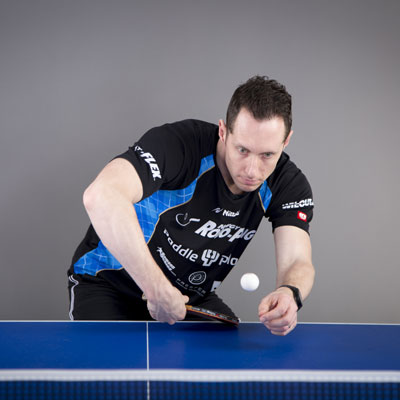
It doesn't work like that. Learning a new skill takes time and there is a systematic progression to learning. If you are learning a new skill, start at stage 1. If have been learning a new skill, try to figure out which stage you are currently at and work from there. This concept can be applied to any stroke, but I'm going to use backhand loop as an illustration here...
Stage #1 Understanding the Need
You have a great forehand loop. You are developing footwork in order to use your forehand as much as possible while still maintaining balance and control. However, you aren’t able to cover the extreme angles and often get stuck blocking or counterdriving with your backhand. You also aren’t able to attack strong against a hard, low block. You clearly understand the a backhand loop against topspin is vital to your game, you are willing to work hard to get this new weapon. Again, this thinking can be applied to any new skill, not just the backhand loop.
Stage #2 Visualization
Next, you need to be able to visualize it in your mind. Start by watching some youtube videos of the world’s top players performing this stroke; if possible, watch the slow-motion version . Also, try to watch other club members, elite players at tournament, and especially some top coaches. This stage should take lesson than 1 week.
Stage #3 Shadow Strokes
Stand in front of a large mirror. Holding your racket, perform about 100 strokes per day trying your best to remember all the elements that you saw during your visualization – stance, foot positioning, shoulder, arm, wrist, racket angle, timing, backswing, contact point, follow through, and other aspects. Occasionally, pause and review the youtube video over and over again for deeper visualization. This stage should take about 1-2 weeks.
Stage #4 Hit the Ball
It is now time to give your new stroke a try! Using your Newgy table tennis robot, have the balls shoot slow topspin to your backhand court. You should be recording your backhand loop throughout the practice. Every 30 seconds, turn off the robot and quickly review the video. If you don’t have access to a Newgy robot, ask a friend or club member to block slowly and consistently to your backhand. The goal is to get 20 consecutive backhand loops on the table. This might possibly be the hardest stage and will likely take 4-5 months to perfect.
Stage #5 Changing Speeds
There are 2 aspect to this stage. The first is to adjust your own speed. You should be able to consistently loop slightly harder or slightly softer while still maintaining consistency and spin. By giving variation in your game, you will be able to keep your opponent off-balance. The second aspect is adjusting your opponent’s speed. Have your training partner or Newgy robot hit the ball sometimes faster and sometimes slower to your backhand. When the fast ball comes, shorten your stroke while spinny through the ball. When the slow ball comes, lengthen your swing. Developing an adjustable stroke will allow you to later perform well against any style – regardless of the quick or slow timing. This stage will probably take about 1 month to somewhat develop and a life of training to perfect. This stage needs to be repeated over and over again, even for professional players.
Stage #6 Changing Distances
In table tennis, most players have a preferred distance that they like to play –near the table, mid-distance, or far from the table. However, in matches, it isn’t always possible to stay at that exact distance. For this reason, it is good to learn to play all three distances and be able to smoothly move from distance to distance within the same rally. If you are closer to the table, shorten your stroke. If you are farther from the table, lengthen your stroke. This stage will probably take about 1-2 weeks.
Stage #7 Combining Strokes
After your have perfected your new skill through the steps previously mentioned, it is time to move to the next stage – combining the strokes. By selecting drill #46, the Newgy Robot will shoot 1 ball to your backhand and 1 ball to your forehand. See if you can be consistent while moving into position and linking the shots together. This stage will probably take about 1 month.
Stage #8 Semi-Systematic Drills
This stage is very similar to the last one, however, now there is a random factor to the drill. Using your Newgy robot, select drill #27. This drill will give you 1 or 2 or 3 balls to the backhand then surprise you with a ball to your wide forehand. Just like in a game, it is important to watch the approaching ball, then quickly transition to watching your opponent’s racket angle or the robot’s head. There are dozens of drill like this one. Semi-systematic means that the balls somewhat hit the table in a system or pattern and sometimes give you a surprise. Other examples of semi-systematic drills include:
1 ball to the middle, then 1 ball to either corner
1 ball to the forehand, 1 ball to the backhand, and 2 balls random
1 or 2 balls to the forehand then 1 or 2 balls to the backhand
You will probably be using drills like these throughout your entire playing career. These drills are fun, challenging, and very game-like.
Stage #9 Random
Random drills are very similar to semi-systematic, except they are much harder. During a random drill, the Newgy robot or training partner can hit the balls anywhere on the table or anywhere in a specified zone for any number of balls. You must be very focused and very flexible to adjust. I personally like to do random drills as the bulk of my training.
Stage #10 Game Situation
Now that you have completed all the previous steps, you are now equipped to use your new skill in a game situation. Have your training partner or robot start with a serve; you should attack the serve and then begin using your backhand loop in the drill. Using the Newgy robot, I would recommend using drills 41 or 59. You are a performing the drills with a training partner, there are a variety of ways to start a game situation drill. You can serve and ask him to flip or push; or he can serve and you attack. Either way, the drill should work into a systematic, semi-systematic, or random drill. Before going to the club, you should be able to comfortably perform game-situation drills.
Stage #11 Club
Here lies one of the main obstacles in perfecting a new skill – losing! At the expense of possibly losing a match, many players don’t want to use their new stroke. First, you must realize that it is ok to lose to someone that you have beaten for the past 2 years. It is ok. Don’t worry what other players might say. Next, think long term. By thinking long term, you will be able to keep temporary winning and losing in perspective. It is ok to lose today to Bob, because I will be beating everyone within 2-3 years. Tell yourself, “Tonight, I’m going to sacrifice present pleasures for future benefits!”
Stage #12 Tournament
Playing tournaments is actually very similar to playing club matches. Continue to remind yourself to do your best, be brave, do the right thing, apply your new skill, perform well, and let winning take care of itself. Be flexible and ready to adjust to a variety of playing styles. Take your time between points and encourage yourself. Your approach to a tournament should be no different than your approach to a club match.
Stage #13 An Important Point
You have been using your new skill successfully throughout the easy match. Now you are in the final of your event and the score is 9-9 in the final game. The entire tournament has stopped to watch this point. At this moment, it is all mental. You have proved to yourself through months of hard training that you have mastered every step of the way. What are you going to do?
The choice is yours.
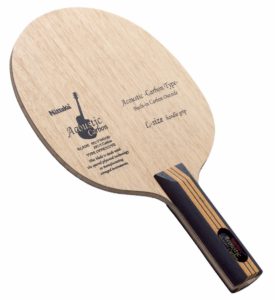
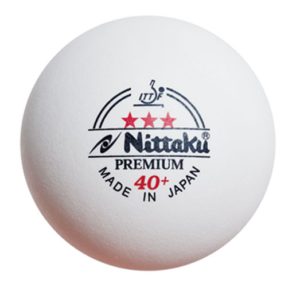
Samson uses the Nittaku Acoustic Carbon Large Grip Blade (Recent Change!) with Nittaku FastArc G1 rubber on both sides along with Nittaku 3- StarPremium 40+ balls.

- Read more great coaching and playing articles by Samson
Related Posts

Anders Lind Breaks Down His WTT Contender Lagos Win
Anders Lind is back on top in Lagos. In his latest video, Anders walks through his WTT Contender Lagos 2026 title run, where he...
Jun 01 2026

Looking Back: Charlie Wuvanich and the Spirit of an Era
Some players are remembered for titles. Others are remembered for the way they changed the people around them. Charlie Wuvanich somehow did both. Originally...
May 13 2026

Harvard’s Kelly Yenn Wins Big at NCTTA Nationals, On and Off the Table
The latest episode of the NCTTA “Off The Table” podcast gave fans a deeper look into one of college table tennis’ brightest stars, Harvard’s...
May 12 2026

The Limit of Talent: Why Development Matters More Than Gifts
One of the most common conversations in sports is about talent. Who has it.Who doesn’t.Who was “born special.” After nearly 50 years in table...
May 12 2026

2026 Minnesota State High School Team Table Tennis Championships
The future of American table tennis was on full display at the 2026 Minnesota State High School Team Table Tennis Championships, as students from...
May 08 2026

Paddle Palace Spring Teams Event Brings High-Level Matches and Breakthrough Moments
The Paddle Palace Spring 2-Person Teams & Giant Round Robin brought together a strong mix of rising juniors, experienced club players, and tough competitors...
May 05 2026

A Weekend with Jiwei Xia at Micro Motion Table Tennis Academy
Paddle Palace sent head coach Jiwei Xia to the Bay Area to work directly with the Micro Motion Table Tennis Academy community. Jiwei spent...
Dec 03 2025

2025 Oregon State Table Tennis Championships
November 8, 2025 – Tigard, Oregon The Paddle Palace Club buzzed with excitement as players from across Oregon came together for the 2025 Oregon...
Nov 11 2025


