

Sponge Hardness
Sponge Hardness
by Samson Dubina
In table tennis, there are various ways to win points – with speed, spin, consistency, placement, and variation. Players utilize each of these elements differently and therefore need different equipment. In this article, I focus on the benefits of playing with soft, medium, or hard sponge. Spin is vitally important. Speed is also vitally important. To produce the best combination of speed and spin together, the ball must sink deep into the sponge and catapult out. How deep will the ball sink in? It depends primarily on the type of sponge you use, your technique, your racket angle, your racket speed, and the speed of the incoming ball. If your racket angle is more open, the ball will penetrate through the sponge and hit the blade, producing more speed and less spin. If your racket angle is too closed, your topsheet will skim the ball and produce spin but not speed. If you have the proper racket angle, the ball will sink deep into the sponge and you will get maximum speed and spin together. So why am I saying all of this? Because after reading this article, you will try to find the right sponge for you! The goal is to choose the right sponge based on how you play! So before continuing this article, take a minute and consider your current level, your strokes, playing style, and distance from the table. Soft Sponge Soft sponge gives the highest and shortest arc making it safest to clear the net and not go deep off the end of the table. Soft rubber produces spin easily and gives the most options allowing you to hit on the rise, on the top of the bounce, or even on the fall by giving a higher, shorter arc with excellent ball control. Soft sponge is best for everything near the table including short game, returning serves, looping backspin, pushing, smashing, blocking, etc. A drawback to soft sponge is less power when counterlooping from mid to far distance because the ball sinks through the sponge and you use more wood and less sponge. If you use soft or medium-soft sponge rubber, then you should loop with a slightly more closed angle. All of my beginner-intermediate level students are using soft sponge to gain the most control and consistency. Medium Sponge Medium sponge is great for experienced loopers and choppers who use mid-distance counterlooping or chopping as their main weapons. Medium sponge gives a lower and deeper arc than soft sponge, making the mid-distance loops more driving and powerful. I personally use medium-hard sponge for my game as it gives maximum speed and spin from mid-distance. Medium sponge can result in slightly less control than soft sponge but often is able to produce more speed and spin on counterloops than soft sponge. Hard Sponge Hard sponge gives the lowest, deepest arc giving the highest potential for speed on the strongest loops and counterloops. If you use hard sponge, you should loop with a slightly more open angle, contacting the ball at the top of the bounce and swinging more forward. When swinging at high speeds, hard sponge has good control while adding the most speed and spin of any sponge type. True Story A 10-year-old boy once came to me for lessons. He was rated around 1000, had a decent forehand and backhand, but had some inconsistencies on his forehand loop against backspin. After looking at his hard sponge, I recommended that he change to soft sponge. He agreed to give it a try. That night, he dad did some tests with him at home on the robot. His dad had him loop 10 backspin balls with the soft sponge, then flip the racket and loop 10 backspin balls with the hard sponge. After doing this many times, they were surprised to see that he was 20-30% more consistent when using the soft sponge. Now, that same boy is over 2200 and uses a much harder sponge. At that time, he needed a softer sponge to create more arc and safely loop the ball on with spin and consistency. Now that he has the feeling for spin, he is capable of contacting the ball higher in the trajectory and of making deeper driving loops, while still maintaining consistency. This example illustrates the point that you might need to use with a particular sponge hardness now, but you may need to change to a different type in 2-3 years as your game progresses. Samson’s Recommendations When deciding which sponge hardness is best for you, primarily consider your current level and playing style.- if you are a beginner or intermediate player, use soft to medium-soft sponge to get the most arc possible for more control.
- If you are an experienced looper playing all distances, use medium-soft to medium sponge.
- If you are an experienced power looper, use medium-hard to hard sponge for the highest speed/spin combination.
- If you are an experienced chopper playing far from the table, use medium sponge for the most control possible for a good balance of speed, spin, height, and depth.
- If you are an experienced offensive short pips player, use medium to hard sponge, or if less experienced use soft to medium-soft sponge.
- If you use anti rubber, use soft sponge.
- If you are a blocker, use soft sponge.
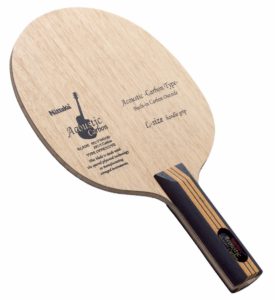
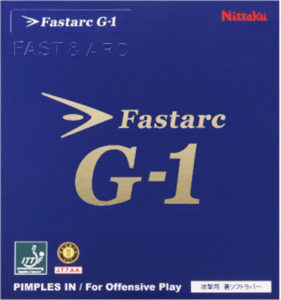
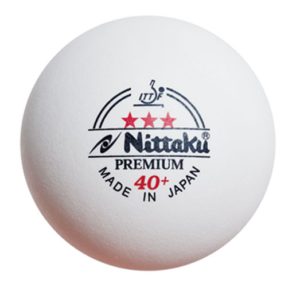
Samson uses the Nittaku Acoustic Carbon Large Grip Blade (Recent Change!) with Nittaku FastArc G1 rubber on both sides along with Nittaku 3- StarPremium 40+ balls.
- Read more great coaching and playing articles by Samson
Tags:
Previous post
2018 Oregon State Championships
Next post
Sponge Hardness – The World's Experts Answer Your Questions
Related Posts

Anders Lind Breaks Down His WTT Contender Lagos Win
Anders Lind is back on top in Lagos. In his latest video, Anders walks through his WTT Contender Lagos 2026 title run, where he...
Jun 01 2026

Looking Back: Charlie Wuvanich and the Spirit of an Era
Some players are remembered for titles. Others are remembered for the way they changed the people around them. Charlie Wuvanich somehow did both. Originally...
May 13 2026

Harvard’s Kelly Yenn Wins Big at NCTTA Nationals, On and Off the Table
The latest episode of the NCTTA “Off The Table” podcast gave fans a deeper look into one of college table tennis’ brightest stars, Harvard’s...
May 12 2026

The Limit of Talent: Why Development Matters More Than Gifts
One of the most common conversations in sports is about talent. Who has it.Who doesn’t.Who was “born special.” After nearly 50 years in table...
May 12 2026

2026 Minnesota State High School Team Table Tennis Championships
The future of American table tennis was on full display at the 2026 Minnesota State High School Team Table Tennis Championships, as students from...
May 08 2026

Paddle Palace Spring Teams Event Brings High-Level Matches and Breakthrough Moments
The Paddle Palace Spring 2-Person Teams & Giant Round Robin brought together a strong mix of rising juniors, experienced club players, and tough competitors...
May 05 2026

A Weekend with Jiwei Xia at Micro Motion Table Tennis Academy
Paddle Palace sent head coach Jiwei Xia to the Bay Area to work directly with the Micro Motion Table Tennis Academy community. Jiwei spent...
Dec 03 2025

2025 Oregon State Table Tennis Championships
November 8, 2025 – Tigard, Oregon The Paddle Palace Club buzzed with excitement as players from across Oregon came together for the 2025 Oregon...
Nov 11 2025


